
The Fellsmere Railroad Section Foremen’s House History
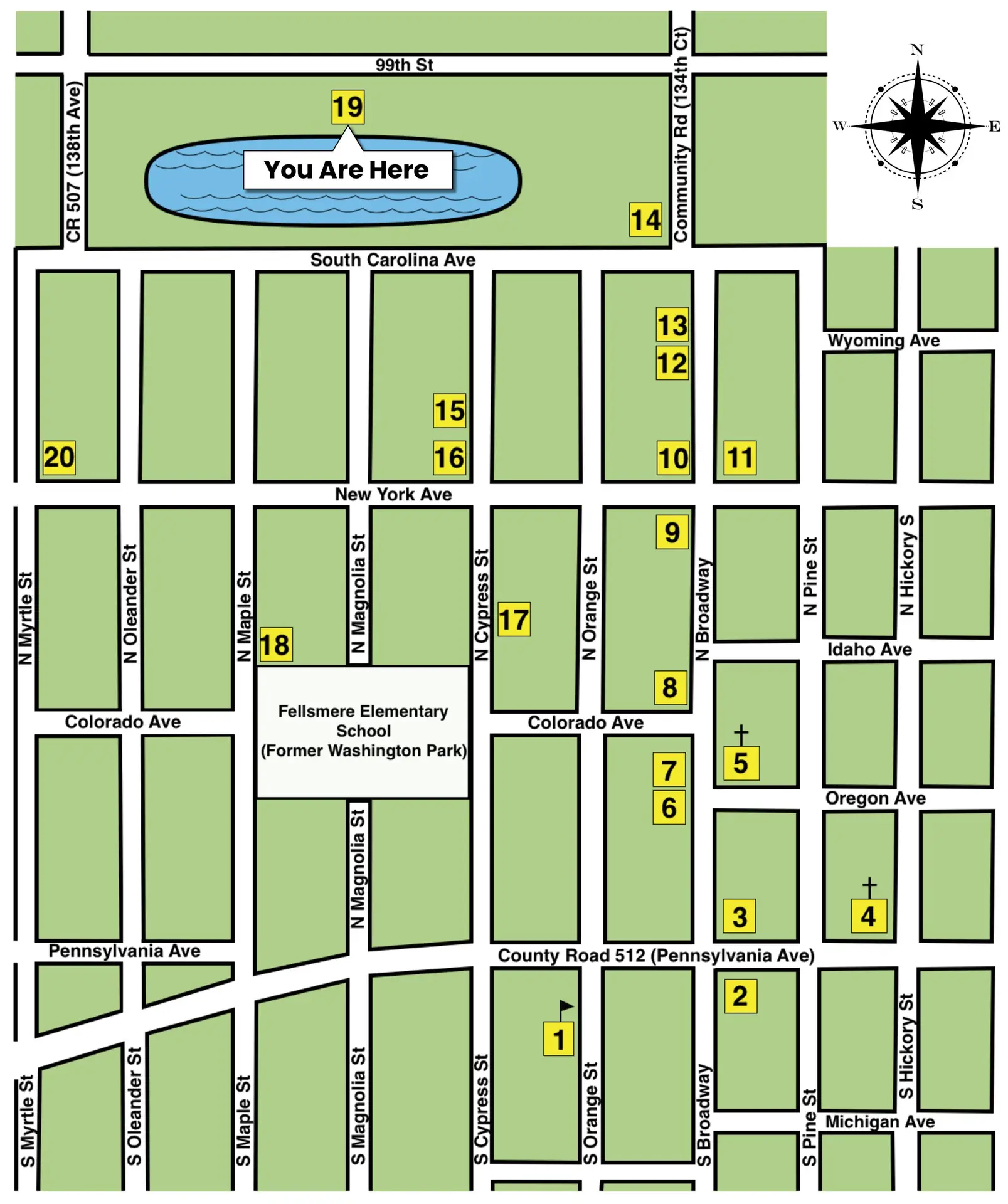
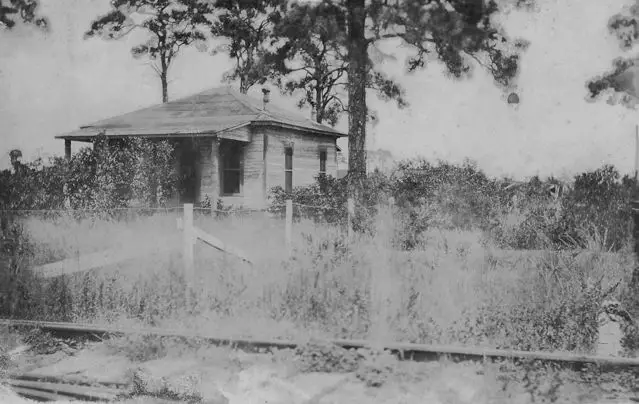
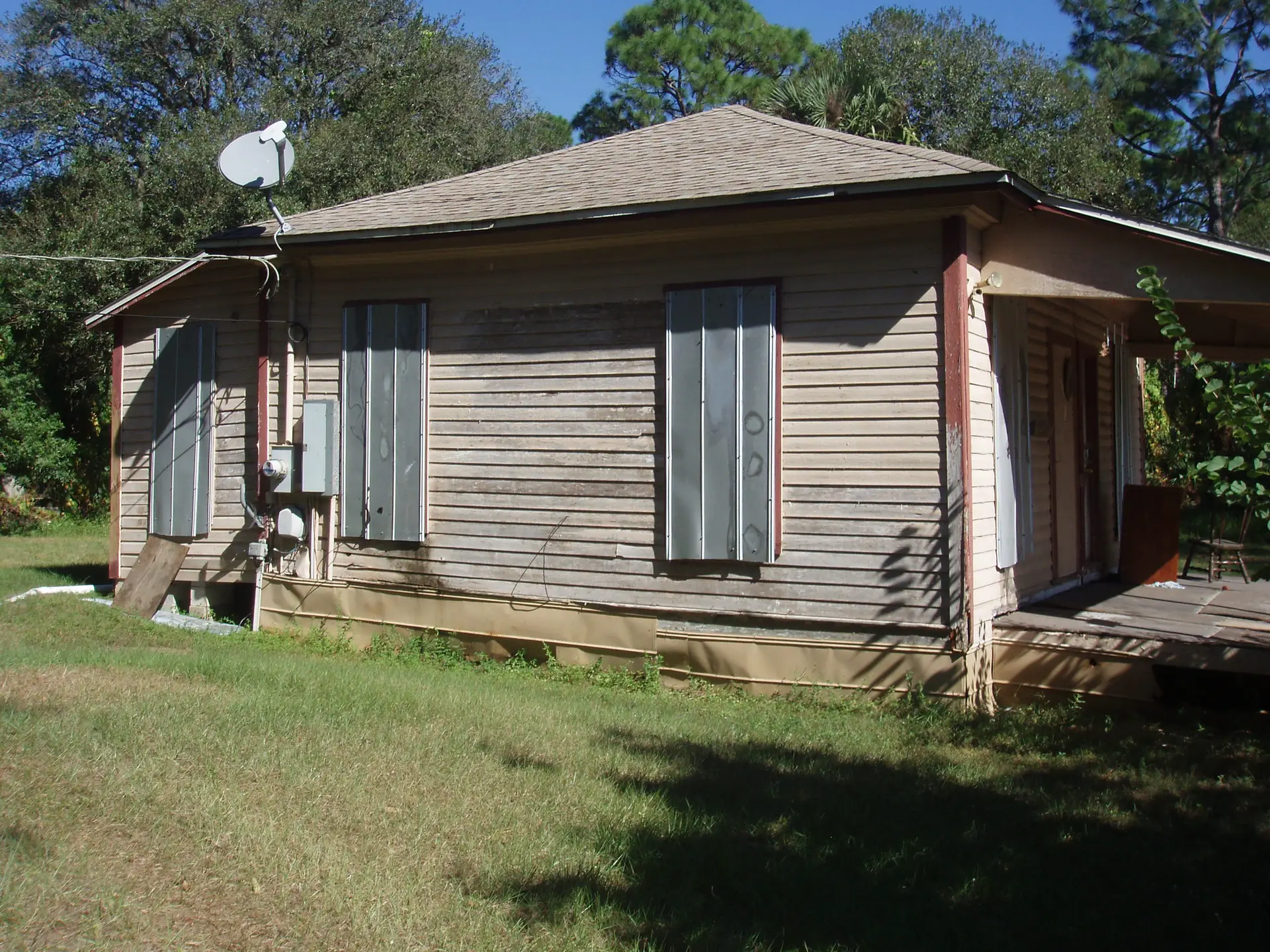
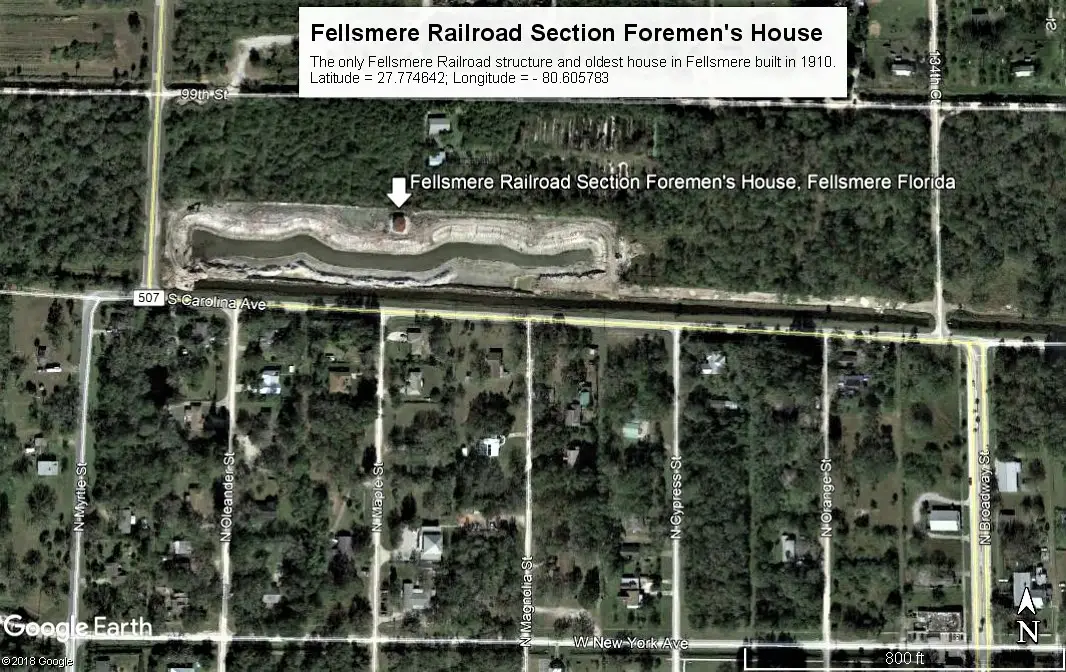
The Fellsmere Railroad Section Foremen’s House is most probably the oldest house in Fellsmere having been built by the end of November 1910.1 Originally located at 9810 Community Road (134th Court) northeast of the intersection of Broadway and South Carolina Avenue within the railroad right-of-way, the City of Fellsmere moved it 1600 feet to the west in 2016. It is still located within the old Fellsmere Railroad right-of-way on the north side of Fellsmere and north of a large stormwater detention pond. It is the only surviving Fellsmere Railroad building in the City of Fellsmere.
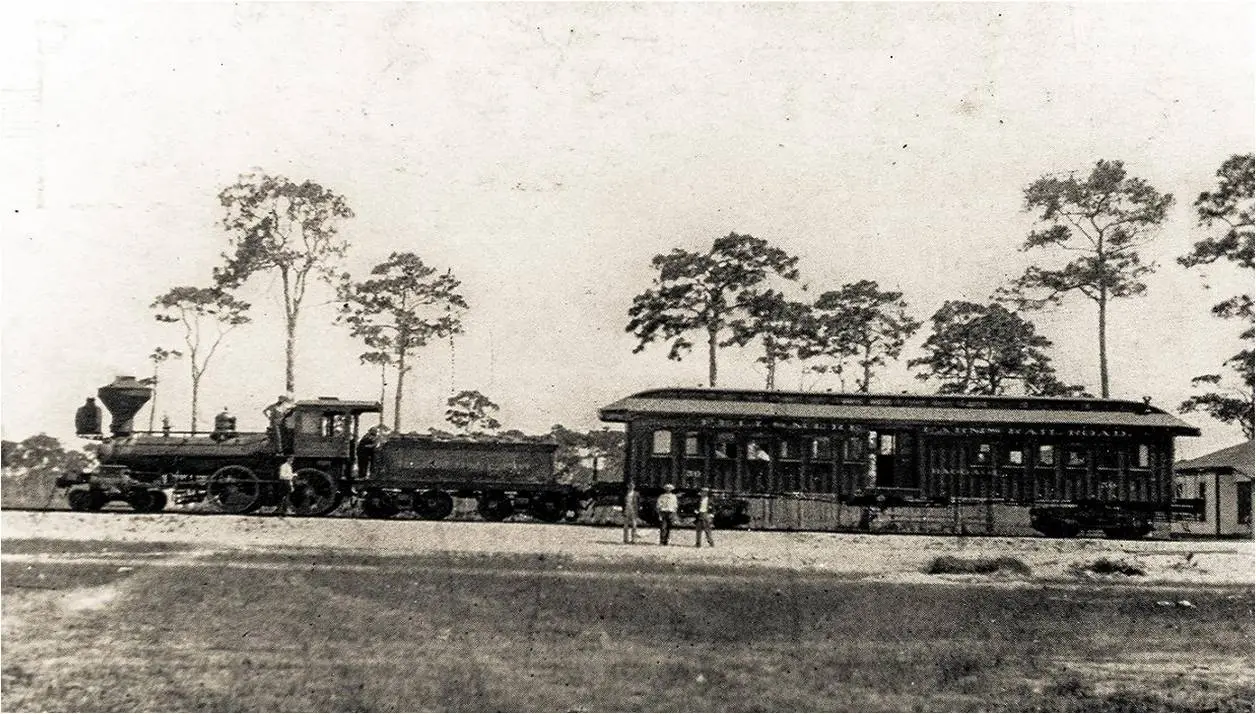
Edward Nelson and Anne Fell, founders of Fellsmere, purchased 180 square miles of property in March 1910, 144 square miles were in St. Lucie County (later Indian River County in 1925) and 36 square miles in Brevard County.2 On May 23, 1910, the Fellsmere Farms Company was incorporated in Florida.3 The first order of business was to construct the Fellsmere Railroad from Sebastian to Fellsmere to bring in all the building materials, supplies, and labor needed to develop Fellsmere.4 By September 1910, the railroad was completed5, and by December 2, 1910, four railroad buildings were completed, one of them being the Section Foremen’s house. It was described as the “greatest, doubtless the largest, best, the only sumptuously finished section boss residence on the east coast of Florida”.6
The Fellsmere Railroad had two section foremen or bosses. Each foremen had his own section gang that was responsible for maintaining the tracks and bridges. They would check the rails, ties, ballast, switches, and bridges on a daily basis to ensure the safe operation of the trains. They used motor cars to inspect the track to find any irregularities or defects that needed to be addressed. They were also responsible for building new side tracks, and re-railing cars and repairing the track after any derailments.
The Section Foremen’s House was completed two years before the Fellsmere Railroad Depot was built in January 1913.7 The depot was located directly north of the intersection of Broadway and South Carolina Avenue. The Section Foremen’s house was originally located approximately 100 feet northeast of the depot.8
The single story wooden frame house was supported on concrete piers which raised it above the ground to protect it against termites and possible flooding, and to provide for air flow to keep it cooler during the summer months. Most likely the house was designed by J. G. White and Company, the engineering firm in New York City engaged in 1910 by the Fellsmere Farms Company for its surveying and engineering work.9
On August 1, 1921, the Fellsmere Company drawing of the Railroad Section Foremen’s House shows that it measured 22′-4″ x 24′-4″. It was equally divided by a wall in the center of the house running from front to back. Front and back doors are shown on both sides of the center dividing wall. The doors opened to a 20-foot by 10-foot wide open porch each having a 5-foot-wide by 3-foot-deep set of steps.10
The house had four rooms, two on each side of the wall. Unfortunately, the rooms were not identified on the floor plan. Each room had two windows. The front rooms had a window facing the front and one on the side; the back rooms had a window facing the back and one on the side. There was a door in the center wall between the first two rooms on both sides of the center wall and an opening with no door between the back two rooms. It is possible that the front two rooms were bedrooms because these rooms could be isolated for privacy by closing the front, middle, and back doors to those rooms.
The inside finish consisted of tongue-and-grooved beaded sides and ceiling. The front two rooms, sides, and ceiling, were painted “buff”. The sides and ceiling of the rear two rooms were painted brown.11
There was a kitchen on the east side in the back room. Possibly, a common dining room/sitting room was in the back room on the west side. There were two vitrified clay chimney pipes on the east side of the house. These chimneys were for two woodburning stoves, one in the kitchen and one in the front room. There was no hot water heater in the house until the 1970s.12 Hot water had to be heated on the stove.
Initially, there was an outhouse in the backyard. Sometime later, a bathroom was added to the back of the house at the northwest (back left) corner of the porch. The bathroom was removed when the house was restored by the City of Fellsmere in 2017.
The house had a hip roof which is the best type of roof to withstand hurricane force winds and is probably one of the reasons why the house is still in existence. The roof was originally covered with red roofing felt.13
The house was painted white with green trim and a red roof which were the standard colors for the Fellsmere Railroad.14 Evidence of the original green paint for the trim still existed in 2016 in certain exterior places of the house.
After the Fellsmere Farms Company went bankrupt in 1916 and was reorganized by the receiver W.H. Tallis in 1917-1918, he fired both section gangs. Maintenance of the railroad had to be done by remaining employees of the railroad from time to time.15 There was no report of anyone living in the Section Foremen’s house after 1917.
On June 2, 1924, the name of the Fellsmere Railroad was changed to the Trans Florida Central Railroad, so the house then became the property of the Trans Florida Central Railroad.16 The Trans Florida Railroad ran a steam train between Broadmoor and Sebastian three times per week.17 Broadmoor was a town five miles due west of Fellsmere that initially was only accessible by boat or the railroad before a road was constructed. The Standard Agricultural Chemical Corporation (later renamed the Ammoniate Products Company), under the leadership of Frank Heiser, a very important figure in the history of Fellsmere, had a muck (fertilizer) plant built there in 1924 which was serviced by the Trans Florida Central Railroad.18 The railroad hired an eight man section crew but that only lasted for a few years until it became too expensive to ship the muck via the railroad. The Broadmoor fertilizer plant closed in the early part of 1927.19 During the period of time from 1924 to 1927, the Section Foremen’s House was most likely lived in again by a section foreman since the Trans Florida Central Railroad required daily maintenance and had the financing to do so.
The Interstate Commerce Commission approved the abandonment of the Trans Florida Central Railroad which shut down on November 30, 1952.20 Although all of the other railroad structures built in the early days of Fellsmere were eventually demolished, only the Section Foremen’s house remained and was occupied as a private residence.
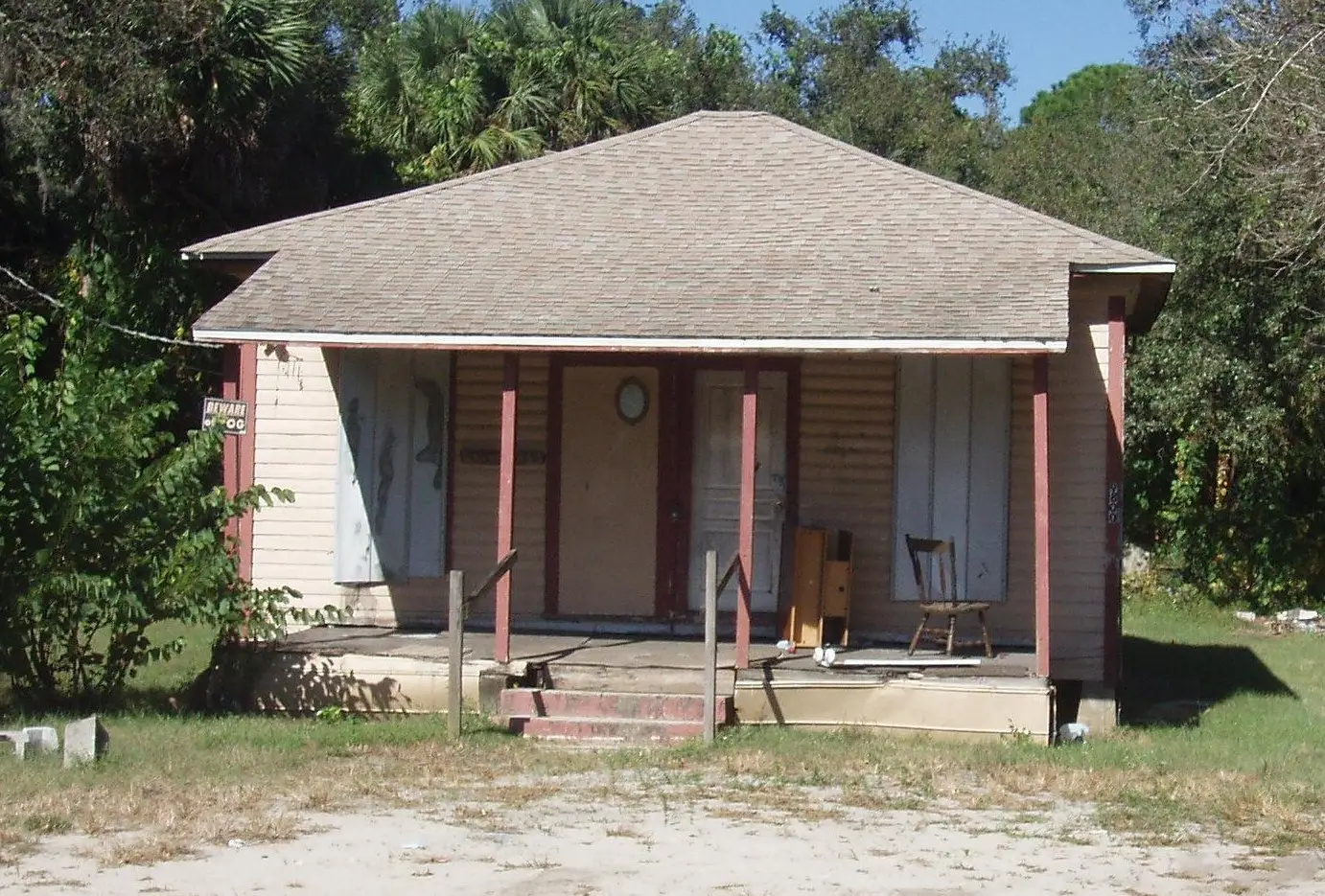
The Trans Florida Central Railroad sold the Section Foremen’s house to Nellie Yates on December 1, 1953.21 Rodney Luke, Nellie Yates grandson, moved in with her in 1969 and continued to live there until 1985, after Nellie died in 1976.22 Rodney inherited the house from his grandmother’s estate on July 5, 1993, and sold it to Ernie Cruce and Eva Stoneroad on April 26, 1999.23 They sold the property to Tollison K. and Ellen Cruce on January 18, 2007.24 On May 30, 2013, Tollison and Ellen Cruce sold the house to Steven Lloyd Morris.25 Even though Steven Morris owned the house, Kirby Cruce and Evelleen Yates were the last persons to live in it. They moved out prior to November 2013.26
Steven Lloyd Morris sold the house to Mirzam Land Investment, LLC. on August 24, 2015.27 Mirzam Land Investment intended to develop an assisted living facility named “The Fountains of Fellsmere” but that project never materialized. However, a 200 foot wide by approximately 1170 foot long parcel on the abandoned Trans Florida Central Railroad was deeded to the City of Fellsmere on March 10, 2016, that was west of the Section Foremen’s House. Since the house was on land owned by Mirzam Land Investment, LLC. and the firm had no use for it, Mirzam Land Investment, LLC. sold the house to the City of Fellsmere on March 18, 2016.28
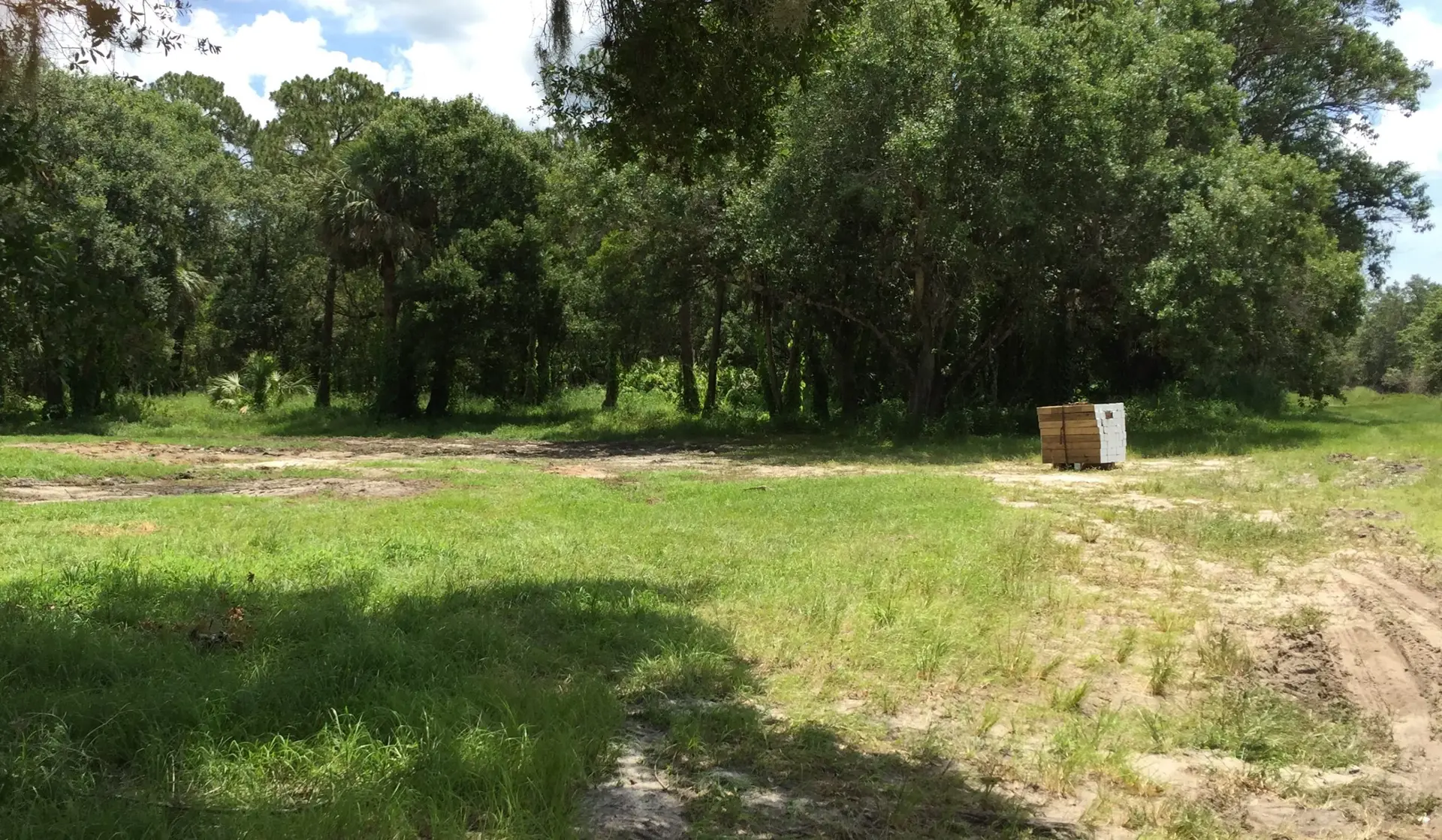
The City of Fellsmere was able to obtain a Florida Historic Preservation Small Matching Grant for $50,000 grant to relocate and restore the Section Foremen’s House.29 The house was jacked up, placed on a trailer, and moved approximately 1600 feet west on July 3, 2016, by Brownie Structural Movers of Ft. Pierce, Florida. It was placed within the abandoned railroad right-of-way property that was deeded to the City of Fellsmere on March 10, 2016, by Mirzam Land Investment, LLC. The house is now located 630 feet east of County Road 507 (138th Avenue) and 180 feet north of South Carolina Avenue, directly opposite the end of North Maple Street. Its new address is 380 South Carolina Avenue.
The City of Fellsmere engaged the services of Renker Eich Parks Architects in St. Petersburg to prepare a condition assessment and restoration plans for the house. In 2016, the Section Foremen’s House was completely restored by De La Hoz Builders.30
In the future, the City of Fellsmere plans to have the Section Foremen’s House as the focal point of a railroad village to be re-created as soon as the city is able to procure the funds for construction of the buildings.